

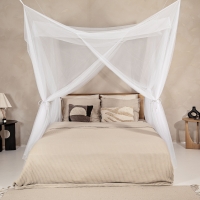
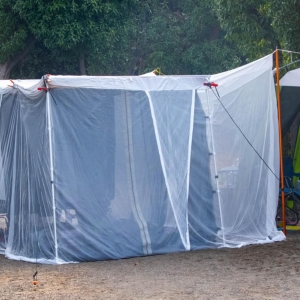


Foldable nets collapse for easy storage and travel, pop-up nets spring open on their own with no installation, and freestanding nets use their own frame so you don't need ceiling hooks. The right choice depends on how portable you need it, how much space you have and the size of your bed. Here's a comparison of how each type works.
Understanding the Main Types
Bug nets for beds come in several designs, and the differences mostly come down to how each one is supported and how easily it sets up and packs away. Hanging nets rely on a ceiling hook or overhead mount. Foldable, pop-up and freestanding styles are different because they either carry their own frame or collapse into a compact shape. That makes them popular for renters, travelers and anyone who can't or doesn't want to drill into a ceiling.
Foldable Bed Nets
Foldable nets are built to fold down small, which makes them a practical choice if you move around a lot. Many use a lightweight frame or hoops that fold or break down into a compact bundle, and they usually come with a carry bag. They're a good fit for travel, dorm rooms, guest beds and seasonal use. The trade-off is that setup can take a little longer than a pop-up design, and you'll want to follow the folding instructions so the frame stays in good shape.
Pop-Up Bed Nets
Pop-up nets use a flexible spring-type frame that opens into shape the moment you release it. There's no assembly, so they're often the fastest option, and they work well for camping, kids' beds and spare rooms. Most have a tent-like or dome shape that sits directly on the bed. The main learning curve is collapsing them: the frame needs to be twisted and folded in a particular way to return to its compact form. Once you've done it once or twice, it becomes quick and easy.
Freestanding Bed Nets
Freestanding nets come with their own poles or frame, so they stand on their own around the bed without relying on a ceiling or wall. Think of them like a four-poster structure draped in netting. They're sturdy, they can be moved from room to room, and they suit renters or spaces with ceilings that can't support a hook. Because of the frame, they take more time to assemble and more space to store. They also need enough clearance around the bed, so measure your room before you buy.
Choosing Based on Bed Size and Space
Bed size matters a lot, since the net has to cover the whole sleeping area with room to spare. Twin and full beds work well with most styles, while queen and king beds usually need a larger frame or more generous coverage. Check the dimensions in the product description and compare them with your mattress. Also consider ceiling height and how much open floor space you have, because a freestanding frame needs room around the bed.
Setup, Storage and Care
When comparing bug nets for beds, think about how often you'll set up and take down your net. If you travel frequently, pop-up and foldable designs are the easiest to pack. If the net stays in one bedroom all season, a sturdier freestanding model may be more comfortable long term. Check that the mesh is fine enough for the insects in your area, and tuck the edges under the mattress or make sure the net reaches the floor so nothing slips in. Wash according to the manufacturer's instructions.
Taking Protection Outdoors
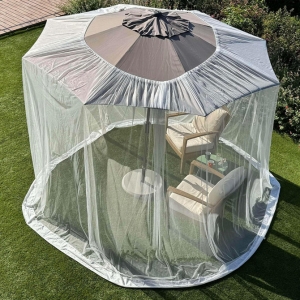
Bed nets handle indoor sleeping, but what about evenings on the patio? If you spend time outdoors, umbrella mosquito netting is worth a look. It drapes over a patio umbrella to create an enclosed seating area, giving you a bug-free space for dinner or relaxing. It works on a different principle than a bed net, using the umbrella itself as the support. Check that the size matches your umbrella and that the netting reaches low enough to keep insects out.
Final Thoughts
Foldable, pop-up and freestanding nets each solve a different problem. Foldable styles pack small, pop-up designs set up in seconds and freestanding models offer stability without ceiling mounts. Think about where you'll use your net, how often you'll move it and how big your bed is. Pick the style that matches your routine, and you'll enjoy quiet, bite-free nights wherever you sleep.