


It can be confusing when you have two keys that appear to belong to the same lock, yet only one actually opens the door. Both keys may look almost identical, and you may even have been told that they are copies of one another. However, a small difference in the key, lock, or way the key was cut can make one work while the other does not.
For Dubai homeowners, tenants, landlords, and businesses, this situation is worth understanding before repeatedly forcing the key or assuming that the lock needs to be replaced. The problem may be surprisingly simple, but it can also reveal wear or an underlying issue with the locking system.
The first step is to compare how both keys behave and determine whether the difference comes from the keys themselves or from the lock.
Start by Testing Both Keys Carefully
If one key works normally, use it first and pay attention to how it feels. Does it enter the lock smoothly? Does it turn without resistance? Does the door lock and unlock normally?
Then remove it and carefully try the second key.
Do not force the second key if it does not enter or turn. The purpose of this test is simply to compare the behaviour of the two keys.
If one key operates the lock easily while the other catches, feels stiff, or will not turn, there is a reason for the difference that should be investigated.
The Two Keys May Not Actually Be Identical
Keys can look extremely similar while having small differences in their cutting.
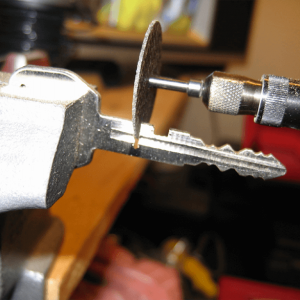
The grooves, cuts, depth, and positioning along the blade determine how the key interacts with the internal components of the lock. Even a relatively small difference can prevent the lock from operating correctly.
This is particularly relevant when a key has been duplicated from another key.
A copy may look correct at first glance but still require checking if it does not behave like the original.
The Original Key May Be Worn
Sometimes the problem is not with the new key at all.
If the working key has been used every day for several years, it may have developed wear. The cuts can become less sharp and the edges can gradually change through repeated use.
Interestingly, a worn original can sometimes continue operating a lock even when a newly cut copy does not.
This is because the lock itself may also have developed wear over time, and the combination of the old key and worn lock can behave differently from a newly cut key.
If the original is visibly worn, it is worth having both the key and lock assessed rather than simply producing more copies from the same worn key.
The New Copy Could Have a Cutting Issue
If the second key was recently made and does not work, the duplication process may need to be reviewed.
The key may have been cut slightly differently from the reference key, or the wrong blank may have been selected.
This does not necessarily mean that the entire service was incorrect. Small variations can sometimes affect whether a particular lock accepts the copy smoothly.
If the original key works perfectly and the new copy does not, take both keys back for comparison rather than repeatedly trying the faulty copy.
Check Whether the Key Enters Fully
There is an important difference between a key that cannot enter the lock fully and one that enters but will not turn.
If the key does not slide into the keyway properly, there may be an issue with the key profile, blank, or physical condition of the blade.
If it enters completely but refuses to turn, the cutting pattern or the internal locking mechanism may need further attention.
These details can help a professional identify where to start.
The Lock Could Be the Real Problem
A key problem is not always a key problem.
The lock itself may be worn, damaged, dirty, misaligned, or affected by another mechanical issue.
If both keys are becoming difficult to turn, this is a particularly useful clue.
Try the working key carefully. If it also feels unusually stiff compared with how it normally operates, the lock may need inspection.
Making another key will not necessarily solve a problem that originates inside the cylinder.
Door Alignment Can Change the Result
The position of the door can also affect how a key operates.
If the door has shifted slightly in its frame, the latch or bolt may press against the strike plate. This can make the locking mechanism more difficult to operate when the door is closed.
Try to compare the key with the door open and closed, without applying excessive pressure.
If the key works smoothly while the door is open but becomes difficult when the door is closed, the alignment of the door and frame may be contributing to the issue.
This is useful information to give a locksmith.
Do Not Force the Key
One of the most important things to avoid is excessive force.
If a key does not work, repeatedly twisting it harder can bend the blade or damage the lock. In some cases, the key could break inside the cylinder.
A broken key can turn a simple duplication issue into an access problem requiring additional work.
If the key is clearly not operating correctly, stop and have it checked.
What If the Key Works in One Door but Not Another?
Some properties have multiple doors that use similar-looking keys.
A key may operate one lock but not another because the locks have different key profiles or different internal configurations.
Never assume that two similar-looking locks use interchangeable keys.
This is especially relevant in offices, villas, apartment buildings, and properties with several entrances.
Identify the exact door associated with each key before arranging additional copies.
What If the Lock Was Recently Changed?
If the property has recently had a lock replaced, old keys may no longer operate the new lock.
This can create confusion when several keys are still lying around.
For example, a homeowner may have an old key that looks almost identical to the new one but does not work because the locking cylinder has been changed.
In this situation, making another copy of the old key will not solve the problem.
The correct reference should be the key currently operating the new lock.
Keep the Best Working Key as Your Reference
If you need additional copies, use the best available working key as the reference where appropriate.
A key that operates smoothly and shows minimal wear is generally a more useful reference than one that is heavily damaged or worn.
Before making several copies, make sure the first new key works correctly.
This avoids producing multiple copies from a key that already has a problem.
What If You Need Copies for Several People?
This situation is common in family homes and offices.
If several authorised people need access, first determine how many keys are actually required.
For a home, you may need copies for household members or a trusted person who requires access. For a business, access should correspond to an employee's responsibilities.
There is no advantage in producing a large number of unnecessary keys if they will not be used.
Keeping track of who has each copy can also make future access management easier.
Businesses Should Pay Extra Attention
For offices and commercial properties, a key that does not work can be more than an inconvenience.
An employee may arrive for work and discover that their key does not open the entrance. A manager may have access to one area but not another. A misplaced key can also create uncertainty about who can enter restricted spaces.
Businesses should therefore keep a basic record of important keys and regularly review access when employees join, change roles, or leave.
If a former employee does not return a key, the business may need to consider whether rekeying or replacing the affected lock is appropriate.
What If You Recently Moved?
Moving into a new home is another situation where keys can become confusing.
You may receive several keys from a landlord, previous owner, property manager, or agent. Some may be current while others may belong to locks that have since been changed.
Rather than making copies immediately, test each key and identify the doors they actually operate.
Once you know which keys are current, you can arrange additional copies as required.
Choosing a Key Copy Service
If one key works and another does not, a professional key service can compare the two keys and help determine what is causing the difference.
When searching for a key copy shop near me, explain that you have two keys for the same lock but only one is working.
Bring both keys if possible. The professional can compare their profiles and condition and determine whether the non-working key requires correction or whether the lock itself needs attention.
This is more useful than simply requesting another copy without explaining the problem.
When You May Need a Locksmith Instead
A straightforward key duplication issue can often be handled by a key-cutting service, but some situations require broader locksmith assistance.
Consider professional locksmith help if the lock itself is difficult to operate, the key is stuck, the cylinder is damaged, the door is misaligned, or several keys are failing.
The locksmith can assess the complete locking arrangement rather than focusing only on the key.
This can help prevent unnecessary duplication when the real problem is the door or lock.
Test the New Copy Before Leaving
If a replacement or duplicate key is produced, test it in the actual lock before considering the job complete.
Make sure it enters fully and turns smoothly.
Lock and unlock the door several times and check that the key can be removed without difficulty.
If possible, test it with the door both open and closed.
If anything feels noticeably different from the working original, mention it immediately.
A key should be reliable before it is handed to another person or stored as an emergency spare.
Frequently Asked Questions
Why does one key work while another does not?
The keys may have slightly different cutting, one may be worn or damaged, or the lock itself may have developed a problem.
Can a key look identical but still fail?
Yes. Small differences in the cutting pattern or key profile can affect whether a lock operates correctly.
Should I keep forcing the non-working key?
No. Excessive force can damage the key or lock and could cause the key to break inside the cylinder.
Should I make another copy from the working key?
If the working key is in good condition, it may be a suitable reference. However, if the lock itself is showing problems, it should be checked first.
When should I contact a locksmith?
If multiple keys fail, the lock is damaged or stiff, the key becomes stuck, or the door appears misaligned, a locksmith can assess the complete system.
Final Thoughts
When one key opens a door and another does not, the difference can come from several places. The second key may have been cut inaccurately, the wrong blank may have been used, or the key itself may be damaged. In other cases, the original key may be worn or the lock may already have an underlying problem.
Start by carefully comparing both keys. Test the working key and the non-working key without applying excessive force. Pay attention to whether the second key enters fully, whether it turns, and whether the problem changes when the door is open or closed.
If the new key is the only one that fails, take both keys to a professional for comparison. If every key is becoming difficult to use, the lock or door alignment may require attention instead.
For Dubai residents searching for a key copy shop near me, explaining the exact problem can help the professional provide the right service rather than simply producing another copy. Bring the working and non-working keys together whenever possible and test any new copy before relying on it.
A key that looks right is not necessarily a key that works correctly. Taking the time to identify why two apparently similar keys behave differently can help you avoid unnecessary copies, protect the lock from damage, and ensure that everyone who genuinely needs access has a properly functioning key.