



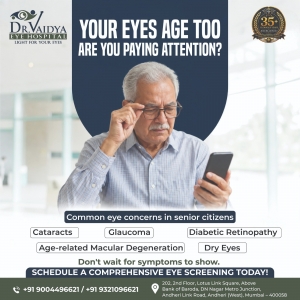
Glaucoma is often called the “silent thief of sight” because it can damage the optic nerve gradually, sometimes without causing noticeable symptoms in the early stages. By the time a person realizes that their vision has changed, significant damage may already have occurred.
This is what makes glaucoma different from many other eye conditions. You may feel that your vision is perfectly normal while changes are quietly taking place.
The good news is that early detection and appropriate treatment can help slow or prevent further vision loss in many people. Knowing what to look for—and understanding the importance of regular eye examinations—can make a meaningful difference.
Here are five warning signs and clues that should not be ignored.
- Gradual Loss of Peripheral Vision
One of the characteristic changes associated with glaucoma is the gradual loss of side or peripheral vision.
Because this happens slowly, your brain may compensate for the missing information, making the change difficult to recognize. You may continue to read, use your phone, or perform everyday activities normally while your peripheral vision is gradually narrowing.
Some people only notice a problem when they begin bumping into objects, having difficulty navigating unfamiliar spaces, or struggling to see things approaching from the side.
A subtle change in side vision should never be dismissed as simply getting older.
- Difficulty Seeing in Low Light
Have you started feeling less comfortable in dimly lit environments? Do you find it harder to move around in poorly illuminated areas or adjust between different lighting conditions?
Although difficulty seeing in low light can have several causes, changes in visual function may warrant an eye examination, particularly when accompanied by other symptoms or risk factors.
Glaucoma can affect the way visual information is processed, and early changes may not always be obvious during normal daytime activities.
- Frequent Changes in Your Glasses Prescription
Needing a new spectacle prescription from time to time is common. However, repeatedly experiencing changes in vision or prescription should not automatically be attributed to ordinary changes in eyesight.
Glaucoma is not simply a problem with your spectacle power. It involves damage to the optic nerve, which carries visual information from the eye to the brain.
If your vision seems to be changing unexpectedly, a comprehensive eye examination can help determine whether there is an underlying eye condition that needs attention.
- Eye Discomfort, Halos or Headaches
Some forms of glaucoma can cause symptoms such as eye pain, redness, blurred vision, headaches, nausea, or seeing halos around lights, particularly when eye pressure rises suddenly.
These symptoms can sometimes occur in acute forms of glaucoma and should not be ignored.
However, it is equally important to understand that the most common forms of glaucoma may have little or no noticeable symptoms in the early stages. Waiting for pain or blurred vision before getting an eye examination can therefore be risky.
- Difficulty Noticing Changes in One Eye
Glaucoma may affect the two eyes differently. When one eye develops more significant visual changes than the other, you may not immediately notice the difference because your stronger eye can compensate.
You might only recognize the problem when one eye is covered or when a specific visual task becomes difficult.
This is one reason routine eye examinations are so important. An ophthalmologist can detect changes that may not be apparent during everyday life.
Who Is More at Risk of Glaucoma?
Glaucoma can affect people of different ages, but certain factors can increase the risk.
Your risk may be higher if you have a family history of glaucoma, are older, have high eye pressure, significant refractive errors, diabetes, or certain other health or eye conditions.
Having a risk factor does not mean that you will definitely develop glaucoma. It simply means that regular monitoring may be particularly important.
Can Glaucoma Be Detected Before You Notice Symptoms?
Yes. This is one of the most important messages about glaucoma.
A comprehensive eye examination can assess more than just how clearly you can read an eye chart. Depending on your age, symptoms, and risk factors, your ophthalmologist may evaluate intraocular pressure, the optic nerve, visual fields, corneal thickness, and other structural features of the eye.
Advanced imaging may also be recommended to assess the optic nerve and retinal structures.
These evaluations can help identify glaucoma or suspicious changes at a stage when you may not notice anything unusual yourself.
Don't Wait for Vision Loss to Get Your Eyes Checked
Glaucoma-related optic nerve damage that has already occurred cannot generally be reversed. However, early diagnosis and appropriate management can help protect remaining vision and reduce the risk of further damage.
That is why regular eye examinations are important even when your vision seems completely normal—especially if you have glaucoma risk factors.
If you notice changes in your peripheral vision, recurring visual disturbances, eye discomfort, or unexplained changes in your vision, consult an ophthalmologist rather than waiting for the symptoms to become severe.
At Dr. Vaidya Eye Hospital, we provide comprehensive evaluation and management for glaucoma, with a focus on early detection, regular monitoring, and individualized treatment. If you are looking for experienced glaucoma care in Andheri, Mumbai, a timely eye examination can help identify potential problems before they begin affecting your everyday vision.
Your eyes may not always warn you when something is wrong. Sometimes, the most important step is simply getting them checked.