







Selecting the right engineering plastic can significantly impact the durability, efficiency, and performance of a finished product. For engineers, CNC machining companies, manufacturers, and product designers, choosing between acetal and Delrin is a common decision when designing precision components. Although these materials share many similarities, understanding their individual characteristics helps ensure the best material is selected for each application.
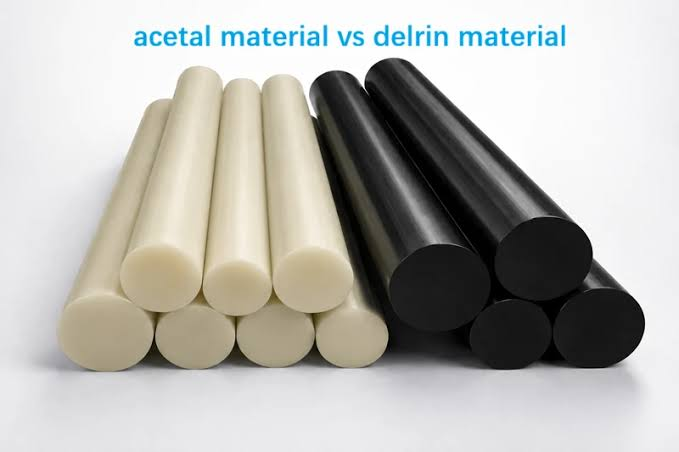
Acetal is a high-performance engineering thermoplastic recognized for its low friction, excellent wear resistance, dimensional stability, and outstanding machinability. Delrin is a well-known brand of acetal homopolymer that offers enhanced mechanical strength and rigidity. Since Delrin belongs to the acetal family, choosing between acetal and Delrin is less about selecting completely different materials and more about matching the material's properties to specific engineering requirements.
Both materials are trusted across industries such as automotive manufacturing, aerospace engineering, robotics, industrial automation, medical equipment, consumer products, and precision CNC machining. Their combination of strength, lightweight construction, and excellent machining performance makes them among the most widely used engineering plastics in modern manufacturing.
Material Performance and Mechanical Properties
When choosing between acetal and Delrin, mechanical performance is one of the most important considerations. Delrin is manufactured as an acetal homopolymer, giving it slightly higher tensile strength, greater stiffness, better hardness, and improved fatigue resistance compared to standard acetal copolymer. These characteristics allow Delrin to perform exceptionally well in applications involving continuous mechanical stress, repetitive movement, and heavy structural loads.
Acetal copolymer provides excellent mechanical performance while offering superior resistance to chemicals and moisture. It performs consistently in humid environments and resists degradation caused by cleaning agents, industrial fluids, and water exposure. These advantages make acetal an excellent choice for equipment used in food processing, pharmaceutical manufacturing, chemical handling, and water treatment facilities.
Both engineering plastics exhibit excellent dimensional stability, allowing precision-machined parts to maintain tight tolerances throughout their service life. Low moisture absorption prevents expansion and distortion, making both materials ideal for high-precision mechanical assemblies, gears, bushings, bearings, rollers, valve components, and electrical insulators.
Another advantage shared by both materials is their naturally low coefficient of friction. This property reduces wear between moving parts, improves equipment efficiency, minimizes lubrication requirements, and extends component lifespan in demanding industrial applications.
Manufacturing Efficiency and Industrial Applications
The process of choosing between acetal and Delrin often depends on manufacturing conditions and production goals. Both materials are exceptionally easy to machine using CNC equipment. Their excellent chip formation, smooth surface finish, and ability to maintain close tolerances help manufacturers produce highly accurate components while reducing machining time and tooling costs.
Delrin is commonly selected for mechanical components that require maximum structural strength and long-term durability. Automotive manufacturers frequently use Delrin for transmission components, fuel system parts, precision gears, and mechanical assemblies. Aerospace companies also value its lightweight construction and outstanding fatigue resistance, making it suitable for demanding applications where weight reduction and reliability are equally important.
Acetal copolymer is widely used in industries where exposure to moisture and chemicals is unavoidable. Food-grade processing equipment, medical instruments, conveyor systems, laboratory devices, fluid control components, and industrial pumps often incorporate acetal because of its excellent chemical compatibility and hydrolysis resistance.
Manufacturers also evaluate production costs when selecting materials. Standard acetal copolymer is generally more economical than Delrin while still delivering impressive engineering performance. For high-volume production runs, acetal often provides an ideal balance between affordability and reliability. Delrin's slightly higher cost is justified when maximum mechanical strength, rigidity, and fatigue resistance are essential for long-term product performance.
The outstanding machinability of both materials also contributes to manufacturing efficiency. Precision CNC machining companies appreciate their ability to produce intricate geometries with excellent dimensional accuracy while minimizing production waste and reducing finishing operations.
Environmental Conditions and Long-Term Reliability
Environmental exposure plays a major role when choosing between acetal and Delrin. Delrin performs exceptionally well in dry operating environments where mechanical strength and rigidity remain the highest priorities. Its superior fatigue resistance allows it to withstand repeated loading without significant material degradation, making it ideal for components operating under constant mechanical stress.
Acetal copolymer offers enhanced resistance to moisture, thermal oxidation, and aggressive industrial chemicals. These properties make it particularly valuable in applications involving continuous cleaning, humid operating conditions, or frequent chemical exposure. Manufacturers seeking long-term reliability in demanding environments often favor acetal because of its stable performance across varying temperatures and operating conditions.
Both materials maintain excellent dimensional stability even after prolonged use. Precision parts retain their original size and shape, ensuring consistent performance in robotics, automation systems, medical devices, electrical equipment, and high-precision industrial machinery. This reliability reduces
maintenance requirements while improving operational efficiency and extending equipment service life.
Electrical insulation properties further increase the versatility of both engineering plastics. Acetal and Delrin are commonly used for electrical connectors, switch components, insulating parts, sensor housings, and electronic assemblies because they combine mechanical durability with dependable electrical performance.
As industries continue replacing heavier metal components with lightweight engineering plastics, both materials remain highly attractive options for improving fuel efficiency, reducing maintenance costs, and enhancing manufacturing productivity.
Material Selection for Future Manufacturing
Modern engineering continues to increase demand for high-performance plastics capable of delivering strength, precision, and long-term durability. Choosing between acetal and Delrin requires balancing mechanical performance, chemical resistance, machining efficiency, environmental conditions, and overall production costs.
Manufacturers developing heavy-duty mechanical systems often select Delrin because of its higher stiffness and superior fatigue resistance. Companies producing equipment exposed to moisture, chemicals, and continuous sanitation processes frequently choose acetal copolymer because of its outstanding chemical stability and reliable long-term performance.
Advancements in CNC machining, industrial automation, electric vehicles, robotics, and precision manufacturing continue expanding the applications for both materials. Their exceptional wear resistance, low friction characteristics, lightweight construction, and excellent machinability ensure they will remain among the most important engineering plastics for years to come.
Understanding the strengths of each material enables engineers to design products that achieve greater durability, improved efficiency, lower maintenance costs, and higher manufacturing quality across a wide variety of industrial sectors.
Conclusion
Choosing between acetal and Delrin depends on the specific requirements of each engineering application rather than identifying one material as universally better. Delrin offers greater mechanical strength, rigidity, and fatigue resistance, making it an excellent choice for high-load precision components. Acetal copolymer provides superior chemical resistance, moisture stability, dimensional accuracy, and cost-effective performance for demanding industrial environments. By carefully evaluating operating conditions, mechanical demands, production budgets, and environmental exposure, manufacturers can confidently select the engineering plastic that delivers the best balance of performance, reliability, and long-term value.