







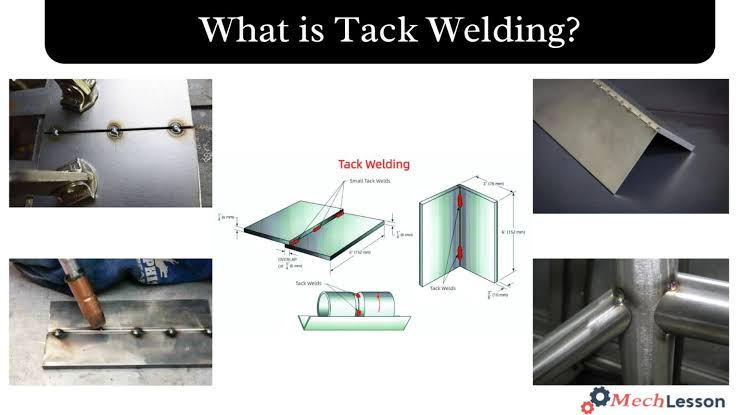
Understanding what tack welding is is essential for anyone involved in metal fabrication, welding repair, automotive manufacturing, construction, or industrial production. Tack welding is the process of making small temporary welds that hold two or more metal pieces in their correct position before completing the final weld. Although tack welds are not intended to be the finished joint, they play a critical role in maintaining alignment, preventing movement, and reducing distortion throughout the welding process.
Professional welders rely on tack welding because even the smallest shift in material alignment can affect the quality, strength, and appearance of the finished weld. Whether working with carbon steel, stainless steel, aluminum, or sheet metal, proper tack weld placement helps ensure consistent results. Learning what tack welding is also improves fabrication efficiency by reducing the need for repeated adjustments and minimizing costly errors.
Today, tack welding is used across numerous industries, including structural steel fabrication, automotive production, pipeline construction, shipbuilding, aerospace manufacturing, and custom metalworking. Regardless of the project size, this simple but essential welding technique forms the foundation of durable and reliable welded structures.
What Tack Welding Is During the Welding Process
Knowing what tack welding is becomes much easier when examining its role in the overall welding process. Before applying a continuous weld bead, metal components must first be positioned accurately. Small tack welds are then placed at carefully selected points along the joint to secure the workpieces. These temporary welds prevent movement caused by handling or heat expansion while allowing the welder to verify measurements before final welding begins.
Surface preparation is one of the first requirements for successful tack welding. Dirt, rust, grease, paint, and oxidation should be removed because contaminants can weaken both the tack weld and the finished joint. Clean metal surfaces improve weld penetration and create stronger fusion between the materials.
Proper heat control is equally important. Excessive heat may cause thin materials to warp, while insufficient heat can produce weak tack welds that break during fabrication. Maintaining the correct welding current, travel speed, and electrode angle helps create dependable tack welds that remain secure until the final weld is completed.
Different welding methods approach tack welding slightly differently. MIG welding is widely used because it provides fast and efficient tack welds suitable for production environments. TIG welding offers exceptional precision, making it ideal for aluminum, stainless steel, and decorative fabrication. Stick welding remains a trusted choice for heavy-duty structural work and outdoor applications where durability is essential.
A clear understanding of what tack welding is also includes recognizing the importance of spacing. Tack welds should be evenly distributed across the joint to balance stress and reduce distortion. Consistent spacing improves dimensional accuracy while creating a stronger foundation for the completed weld.
What Tack Welding Is Across Industrial Applications
The importance of understanding what tack welding is becomes even more apparent when looking at its widespread industrial use. Structural steel fabrication depends on tack welding to hold beams, columns, and framework securely in place before permanent welds are made. This process allows fabricators to verify alignment and make adjustments before completing the structure.
In automotive manufacturing, tack welding ensures accurate positioning of chassis components, body panels, suspension systems, and exhaust assemblies. Proper alignment at the tack welding stage contributes directly to vehicle safety, structural integrity, and manufacturing precision.
Pipe welding is another industry where tack welding is indispensable. Pipelines, pressure vessels, and industrial piping systems require exact alignment to ensure proper weld penetration and leak-free performance. Tack welds hold pipe sections in position while welders maintain consistent root gaps during final welding.
Sheet metal fabrication also relies heavily on tack welding because thin materials are particularly vulnerable to heat distortion. Carefully placed tack welds help maintain the original shape of the metal while minimizing thermal expansion during fabrication. Industries such as HVAC manufacturing, appliance production, architectural metalwork, and metal furniture production all benefit from this technique.
Heavy equipment manufacturing, agricultural machinery, marine construction, aerospace engineering, and custom fabrication shops all use tack welding as a standard practice. Understanding what tack welding is allows welders to improve productivity while maintaining high-quality standards in every project.
Modern welding technology has made tack welding even more efficient. Advanced inverter welding machines provide stable arc performance, improved heat control, and consistent welding parameters that help produce cleaner and more reliable tack welds. These innovations contribute to better weld quality while reducing operator fatigue and production time.
What Tack Welding Is for Long-Term Welding Success
Learning what tack welding is also involves understanding the factors that contribute to long-term welding success. Proper joint fit-up is essential because gaps between metal pieces directly affect weld penetration and structural strength. Welding clamps, fixtures, and magnetic holders are commonly used to keep materials securely positioned while tack welds are applied.
Material thickness influences both the size and spacing of tack welds. Thin sheet metal requires smaller tack welds to minimize heat buildup, while thicker steel sections often require stronger tack welds to prevent movement during fabrication. Selecting compatible filler metals also improves fusion and creates better consistency between tack welds and final welds.
Inspection is another important step in professional welding. Every tack weld should be examined before final welding begins. Cracked, porous, or poorly fused tack welds should be removed and replaced immediately to prevent structural defects later in the project. Early inspection saves time and helps produce stronger finished welds.
Experienced welders often alternate tack weld placement across opposite sides of the joint. This balanced welding sequence distributes heat more evenly, reducing internal stresses and minimizing distortion. The technique is especially valuable when working with stainless steel and aluminum, which are more sensitive to heat expansion than carbon steel.
Continuous practice remains one of the best ways to master tack welding. As welders gain experience, they develop greater control over arc length, travel speed, heat input, and weld positioning. These improvements lead to cleaner tack welds, stronger joints, and higher-quality fabrication results across a wide range of welding applications.
Conclusion
Understanding what tack welding is is fundamental to producing accurate, durable, and professional-quality welds. Tack welding serves as the foundation of successful fabrication by securing components in their correct position before permanent welding begins. Its role in maintaining alignment, controlling distortion, improving joint strength, and increasing production efficiency makes it an essential technique in industries ranging from construction and automotive manufacturing to pipeline fabrication and custom metalworking.
By focusing on proper surface preparation, correct heat control, accurate tack weld placement, and careful inspection, welders can achieve stronger and more reliable finished products. Whether using MIG, TIG, or stick welding, mastering what tack welding is helps reduce costly mistakes, improve welding precision, and create long-lasting welds that meet professional standards. Investing time in understanding and applying this essential welding process leads to better craftsmanship, improved productivity, and superior results in every fabrication project.