


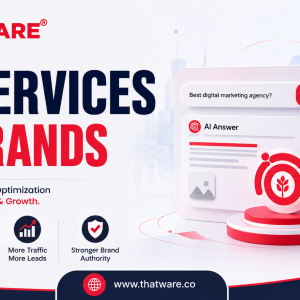



Search behavior is changing rapidly. People are no longer depending only on Google to find businesses, compare services, or discover products. Today, users are asking ChatGPT, Gemini, Perplexity, and other AI platforms direct questions and expecting complete answers instantly.
This shift has created a serious visibility issue for many businesses. A website may rank well on search engines and still remain invisible inside AI-generated search results. In some cases, AI tools mention brands incorrectly. In other situations, businesses are ignored completely even when they are highly relevant to the topic.
This is the hidden SEO problem many companies have not identified yet.
Your website may exist online, but AI systems may still struggle to understand what your business does, who you serve, and why your brand matters.
Why AI Search Is Different From Traditional Search
Traditional SEO focused heavily on keywords, backlinks, and rankings. While those factors still matter, AI-powered search systems work differently.
Large language models try to understand entities, relationships, context, authority, and relevance. Instead of matching keywords alone, AI systems analyze how consistently and accurately a brand is described across the web.
If your business information is unclear, inconsistent, or poorly structured, AI systems cannot confidently interpret your brand.
That creates a major visibility gap.
A company with strong authority signals and clear digital documentation is easier for AI to recognize. A company with weak content, scattered information, or limited third-party mentions becomes difficult for AI systems to understand properly.
The Three Biggest AI Visibility Problems
Businesses are already experiencing several common AI search visibility issues.
Your Brand Is Missing Completely
This is one of the most common problems today.
A user may ask an AI tool about the best companies in your industry, but your business never appears in the response even though you offer relevant services.
This usually happens because AI systems do not have enough trusted information about your brand across authoritative sources.
Your Brand Information Is Incorrect
Sometimes AI tools recognize a business but describe it inaccurately.
A company may be connected to outdated services, incorrect product categories, or even confused with competitors. This creates confusion for potential customers and weakens trust immediately.
Competitors Receive Better Visibility
In many industries, AI tools mention some businesses with stronger confidence and greater detail than others.
That advantage usually comes from better entity clarity, stronger authority signals, expert-level content, and credible third-party references.
This is where llm visibility optimization becomes important for brands trying to improve visibility in AI-powered search environments.
What Makes a Website Easy for AI to Understand
AI systems rely heavily on consistency and clarity.
They need strong signals that define what your business does and how it fits within a specific industry. If your messaging changes across websites, directories, articles, and social platforms, AI systems receive mixed information.
Websites that perform better in AI search usually have:
- Clear brand positioning
- Consistent business descriptions
- Structured content architecture
- Strong topical authority
- Expert-level informational content
- Accurate citations across trusted platforms
- Reviews and third-party mentions
- Organized schema markup
- Clear service and audience definitions
AI systems build confidence when these signals appear repeatedly across reliable sources.
Without these signals, businesses become difficult for language models to categorize properly.
Thin Content No Longer Works
Many businesses still publish generic SEO articles written only for rankings. That strategy is becoming less effective in AI-driven search environments.
AI systems evaluate content quality differently. They prioritize depth, relevance, expertise, and usefulness rather than simple keyword repetition.
Content created only for search engines often lacks the context and authority AI systems need.
Businesses now need content that demonstrates real industry knowledge. That includes:
- In-depth guides
- Expert insights
- Problem-solving resources
- Case studies
- Research-based content
- Industry commentary
- Customer-focused educational material
The more valuable and specific the content becomes, the easier it is for AI systems to understand the expertise behind the brand.
Why Third-Party Mentions Matter More Than Ever
One major factor influencing AI visibility is external validation.
AI tools trust brands that are discussed across authoritative third-party websites. Industry publications, review platforms, interviews, comparison articles, and expert references all help strengthen brand credibility.
This creates what many experts call a citation footprint.
A strong citation footprint helps AI systems connect your brand with expertise, trust, and authority.
Businesses mentioned consistently across trusted sources are easier for AI tools to recommend confidently.
This is one reason why many companies are now investing in AI search optimization service strategies to strengthen their digital authority beyond traditional SEO methods.
The Importance of Structured Data and Entity Clarity
Technical SEO is becoming increasingly important for AI visibility.
Structured data helps AI systems understand business information more accurately. Schema markup, organized content structures, and semantic relationships all contribute to better machine readability.
AI systems need clear signals about:
- Business categories
- Services offered
- Industry relevance
- Geographic presence
- Brand relationships
- Product information
- Expertise areas
Without proper structure, even high-quality websites may struggle to appear correctly inside AI-generated search results.
Entity clarity is becoming one of the most important parts of modern SEO strategy.
AI Search Is Changing Customer Decision-Making
Consumers are beginning to trust AI-generated recommendations during the research process.
Instead of opening multiple websites, users now ask conversational questions and expect direct answers instantly. AI tools summarize information quickly, making visibility inside these platforms extremely valuable.
If your brand is missing, misrepresented, or overshadowed by competitors, potential customers may never discover your business.
That makes AI visibility a business growth issue, not just an SEO issue.
Businesses that establish strong authority signals early will likely gain long-term advantages as AI-assisted search continues expanding.
Why Businesses Need to Act Now
AI search visibility is still developing, which means businesses currently have an opportunity to build authority before competition increases further.
Companies improving their digital entity signals today are positioning themselves for future search behavior.
This includes improving content quality, strengthening citations, building authority across trusted platforms, and maintaining consistent brand information everywhere online.
Resources like Hidden SEO Problems That Hurt AI Search Visibility are helping businesses understand why traditional SEO alone is no longer enough in modern AI-driven search ecosystems.
The future of search is becoming more conversational, context-driven, and entity-focused. Businesses that adapt now will have a stronger chance of remaining visible as AI continues shaping how users discover information online.
Brands like ThatWare are already focusing on advanced AI-ready SEO strategies designed to improve how language models interpret, understand, and recommend businesses across modern search platforms.