

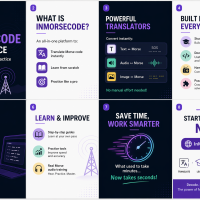





Morse code is one of the oldest communication systems still in use today. Even though it was developed in the 19th century, it continues to play a surprising role in modern technology, education, puzzles, and digital communication.
What has changed significantly, however, is how we interact with it. In the past, decoding Morse code required training, patience, and experience. Today, advanced online tools make it possible for anyone to translate Morse code instantly using text, audio, images, and even light signals.
This shift has made Morse code more accessible than ever before.
What is Morse Code and Why is it Still Relevant?
Morse code is a system of encoding letters and numbers using short and long signals, commonly known as dots and dashes. It was originally designed for telegraph communication but has survived into the modern era due to its simplicity and reliability.
Despite being an old system, Morse code is still used in:
- Aviation and maritime communication
- Emergency signaling
- Educational tools
- Cybersecurity and puzzle challenges
- Hobbyist and amateur radio communication
Its ability to work without internet or advanced technology makes it surprisingly valuable even today.
The Rise of Online Morse Code Translators
With the growth of digital tools, Morse code decoding has become much easier. Online translators now allow users to convert different types of input into readable text within seconds.
Modern tools typically support multiple formats:
1. Text-Based Conversion
This is the simplest form of Morse code translation. Users type a message, and it is instantly converted into Morse code—or vice versa.
It is commonly used for:
- Learning Morse code basics
- Quick message conversion
- Educational demonstrations
2. Audio-Based Decoding
Audio Morse code translators analyze sound signals such as beeps or tones and convert them into text.
This is especially useful for:
- Radio signals
- Recorded Morse transmissions
- Learning Morse code through sound patterns
3. Image-Based Decoding
One of the fastest-growing features in modern tools is image decoding.
Users can upload:
- Screenshots
- Puzzle images
- Photos containing Morse code
The system automatically detects dot-and-dash patterns and converts them into readable text.
This is widely used in:
- Escape rooms
- Online puzzles
- Hidden message decoding
4. Light Signal Translation
Morse code can also be transmitted using light signals such as flashlight flashes or LED indicators.
Modern tools can interpret:
- Short flashes (dots)
- Long flashes (dashes)
This makes it useful in emergency communication or offline environments.
Why People Use Morse Code Tools Today
Although Morse code is no longer a primary communication method, it has found new life in modern digital culture.
Some of the most common reasons include:
1. Puzzle Solving and Games
Morse code is frequently used in escape rooms, treasure hunts, and online puzzles. It adds a layer of challenge and mystery to problem-solving activities.
2. Learning and Education
Many students use Morse code tools to understand how early communication systems worked. It also helps improve memory and pattern recognition skills.
3. Cybersecurity Challenges
In CTF (Capture The Flag) competitions, Morse code often appears as part of encoded messages that participants must decode.
4. Creative Communication
Some users enjoy using Morse code for hidden messages or creative expression in digital content.
Choosing the Right Morse Code Tool
Not all Morse code translators offer the same level of accuracy or functionality. A good tool should provide:
- Fast and accurate decoding
- Support for multiple input types (text, audio, image, light)
- Simple and clean interface
- Real-time conversion
Platforms like modern all-in-one Morse code tools make it easier for users to work across different formats without switching between multiple websites.
The Future of Morse Code Technology
Morse code tools are evolving quickly with improvements in artificial intelligence and signal processing.
Future systems are expected to include:
- Better noise filtering in audio decoding
- More accurate image recognition
- Real-time signal interpretation
- Mobile-first integration for faster access
This means Morse code will continue to remain relevant in both educational and practical applications.
Final Thoughts
Morse code may be one of the oldest communication systems in history, but it is far from outdated. Thanks to modern technology, it has become easier to use, learn, and apply in real-world situations.
Whether you're decoding an audio signal, analyzing an image, or simply learning the basics, modern Morse code tools make the entire process fast and accessible.
For users looking for an all-in-one solution that supports multiple formats and quick decoding, platforms like advanced Morse code translators provide a simple and effective way to work with Morse code in today’s digital world.