

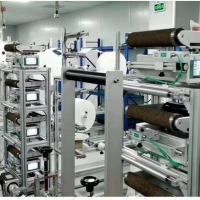






In modern printing industries such as packaging, labels, flexible materials, and commercial printing, maintaining consistent product quality is essential. Traditional inspection methods often rely on manual checks or rule-based machine vision systems, which can struggle to detect subtle or complex defects at high production speeds. With the rapid development of artificial intelligence, AI-based defect detection systems are transforming print inspection are transforming print inspection by improving detection accuracy, efficiency, and adaptability. These intelligent technologies enable manufacturers to identify printing defects in real time, reduce waste, and maintain high standards of product quality.
The Role of AI in Print Inspection
Artificial intelligence introduces advanced data analysis and learning capabilities into print inspection systems. Unlike conventional vision systems that rely on fixed rules and predefined thresholds, AI models can learn patterns from large datasets of printed images. By training deep learning algorithms with examples of both acceptable prints and defective prints, the system becomes capable of recognizing subtle variations that might otherwise go unnoticed.
AI-driven inspection systems analyze high-resolution images captured by line-scan or area cameras installed along the printing line. The algorithms continuously evaluate these images and compare them with reference patterns to identify anomalies. Because the system learns from historical data, it can adapt to different print designs, materials, and production conditions without requiring constant manual adjustment.
This capability is particularly valuable in industries where frequent design changes occur, such as packaging and label printing.

Types of Printing Defects Detected by AI
AI-based inspection technologies are capable of identifying a wide range of printing defects with high precision. These include both obvious defects and subtle imperfections that are difficult for traditional systems to detect.
Common printing defects detected by AI inspection systems include missing prints, color deviations, streaks, smudges, and ink contamination. AI models can also detect registration errors where different color layers do not align correctly, which is a critical issue in multi-color printing processes.
Another significant advantage of AI is its ability to identify complex pattern distortions, micro-scratches, and inconsistent textures in printed materials. These defects often occur due to issues with printing plates, rollers, or ink supply systems. By detecting them early, manufacturers can correct production problems before large quantities of defective products are produced.

Advantages of AI-Driven Print Inspection
AI-powered inspection systems offer several advantages compared to conventional print inspection technologies. One of the most significant benefits is improved detection accuracy. Deep learning algorithms can analyze thousands of image features simultaneously, allowing them to recognize defects with much greater precision than traditional rule-based systems.
Another important advantage is adaptability. Traditional inspection systems require engineers to manually set parameters and thresholds for each new print job. In contrast, AI systems can learn new patterns quickly, significantly reducing setup time when switching between different designs or products.
Real-time processing is another key benefit. AI inspection systems can analyze images instantly during production, allowing defective materials to be removed immediately from the production line. This prevents defective products from reaching downstream processes such as packaging or shipping.
AI systems also contribute to data-driven manufacturing. Inspection results can be recorded and analyzed over time, helping manufacturers identify recurring production issues, optimize machine settings, and improve overall process control.
Integration with High-Speed Printing Systems
Modern printing machines often operate at extremely high speeds, producing thousands of meters of printed material per minute. AI-based inspection systems are designed to operate in these demanding environments. High-speed industrial cameras capture continuous image streams, while powerful computing units process the data in real time.
Many AI inspection platforms integrate seamlessly with automated quality control systems. When a defect is detected, the system can trigger alarms, mark defective areas, or automatically stop the printing process if the defect rate exceeds acceptable limits. This integration helps prevent costly production errors and ensures consistent quality throughout the manufacturing process.
Challenges in Implementing AI Inspection Systems
Despite their advantages, AI-based inspection systems also present certain challenges. One of the main challenges is the need for high-quality training data. Accurate defect detection depends on large datasets containing examples of various defect types. Collecting and labeling these images can be time-consuming, especially during the initial deployment phase.
Another challenge involves computational requirements. Deep learning algorithms require powerful processors or GPUs to perform real-time analysis of high-resolution images. However, ongoing advancements in edge computing and industrial AI hardware are rapidly reducing these limitations.
In addition, integrating AI systems with existing production equipment may require adjustments in hardware, software, and workflow processes.

Future Trends in AI-Based Print Inspection
As artificial intelligence technology continues to evolve, AI-based print inspection systems are expected to become even more advanced. One emerging trend is the use of self-learning systems that continuously improve their detection capabilities during operation. These systems can automatically update their models based on newly detected defects and changing production conditions.
Another important development is the integration of AI inspection with smart manufacturing platforms. By connecting inspection data with other production systems, manufacturers can implement predictive maintenance, automated quality control, and real-time production optimization.
In addition, improvements in high-resolution imaging, industrial edge computing, and machine learning algorithms will further enhance the speed and accuracy of defect detection.
Summary
AI defect detection is revolutionizing print inspection by providing highly accurate, adaptable, and real-time quality monitoring solutions. Compared with traditional inspection methods, AI-powered systems can detect complex defects, reduce production waste, and improve manufacturing efficiency. Although challenges such as data requirements and system integration remain, ongoing technological advancements are making AI inspection increasingly practical for modern printing operations. As the printing industry continues to embrace digital transformation, AI-driven inspection systems will play a critical role in ensuring consistent product quality and efficient production processes.